
Whispers of summer linger in the air as I prepare a fresh batch of Basil Pesto. This vibrant Italian sauce, crafted from fragrant basil, fragrant garlic, and rich parmesan, is a celebration of simplicity and flavor. What I love most is its versatility—it effortlessly transforms a mundane pasta dish into a gourmet experience, or adds a delightful twist to sandwiches and salads. Plus, making this homemade pesto is incredibly quick and can be frozen, so you can enjoy that garden-fresh taste long after the season has passed. So, are you ready to elevate your culinary creations with this timeless recipe? Let’s dive into the world of homemade goodness!
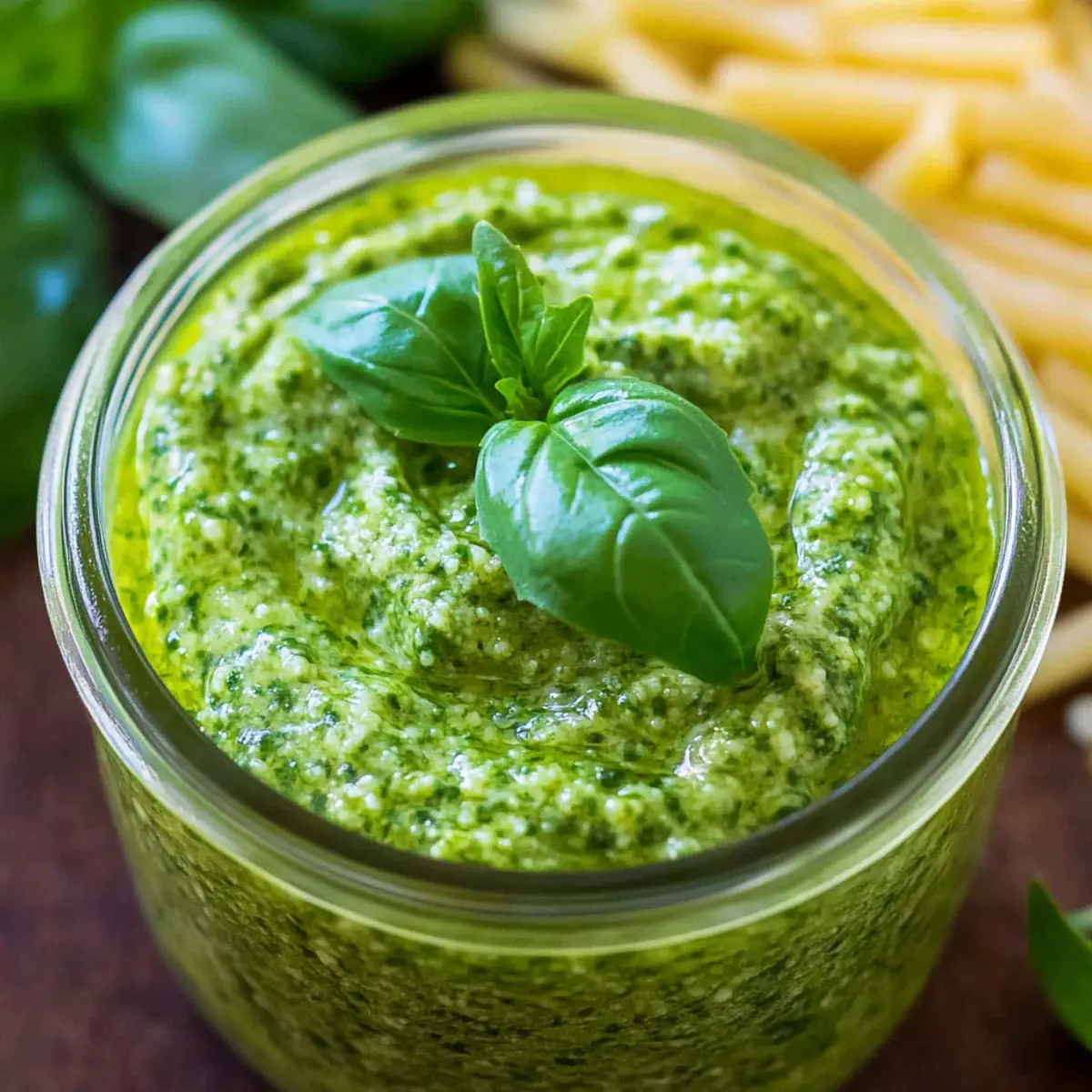
Why is Homemade Basil Pesto a Must-Try?
Vibrant, Fresh Ingredients: The essence of Basil Pesto lies in its fresh, high-quality ingredients, combining bright basil with zesty garlic and nutty parmesan.
Quick and Easy: Whipping up this homemade sauce takes just minutes, making it a perfect option for busy weeknights or unexpected guests.
Versatile Uses: Drizzle it over pasta, spread it on sandwiches, or use it as a dip for veggies – the possibilities are endless! If you love experimenting with flavors, try our Stuffed Sweet Pesto or the delightful Pesto Caprese Puff.
Nut-Free Alternatives: Whether you prefer walnuts, almonds, or even pumpkin seeds, you can customize your pesto to suit your taste and dietary needs.
Crowd-Pleasing Flavor: With its rich, savory, and refreshing taste, this pesto is sure to impress family and friends alike, making it a staple in any kitchen.
Basil Pesto Ingredients
For the Pesto Base
• Fresh Basil Leaves – Main flavor component; use Italian large-leaf basil for the best taste; Thai or lemon basil can also provide unique twists.
• Parmesan Cheese – Adds nuttiness and depth; for a vegan option, substitute with nutritional yeast.
• Extra Virgin Olive Oil – Helps emulsify and enrich the pesto; avocado oil is a great alternative for a milder flavor.
• Pine Nuts – Traditional nut component that adds creaminess; replace with walnuts, pistachios, or pumpkin seeds for a different flavor profile.
• Garlic Cloves – Infuses sharpness and flavor; omit if avoiding garlic or use garlic-infused oil for a gentler touch.
• Lemon Juice – Brightens the sauce and preserves color; adjust to taste or omit for a milder flavor.
• Salt & Black Pepper – Essential for seasoning and enhancing flavor; adjust based on personal preference and dietary restrictions.
Storage Tips
• Ice Cube Trays – Freeze pesto in ice cube trays for easy portioning later; just pour a thin layer of olive oil on top before sealing to prevent browning.
This Basil Pesto not only elevates your dishes but also brings the taste of summer into your kitchen year-round!
Step‑by‑Step Instructions for Basil Pesto
Step 1: Prepare the Basil
Start by washing a generous handful of fresh basil leaves under cold running water to remove any dirt. Use a salad spinner to ensure they’re completely dry, which is crucial for a smooth Basil Pesto. Set the cleaned basil aside while you gather the other ingredients.
Step 2: Combine Ingredients
In your food processor, combine the dried basil leaves with 1/2 cup of grated parmesan cheese, 1/3 cup of pine nuts, and 1-2 garlic cloves. Drizzle in 1/2 cup of extra virgin olive oil, followed by a squeeze of fresh lemon juice. Add a pinch of salt and black pepper. Secure the lid and pulse for about 30 seconds until you achieve a chunky consistency.
Step 3: Blend to Smoothness
Continue to process the mixture for another 30 seconds to 1 minute, scraping down the sides as needed. You want the Basil Pesto to become smooth and creamy, with a vibrant green color. If it seems too thick, you can add an extra tablespoon of olive oil to loosen it up to your desired texture.
Step 4: Taste and Adjust
Once blended, taste your Basil Pesto and decide if it needs additional seasoning. You can add a bit more salt, pepper, or lemon juice to enhance the flavor. Blend again for a few seconds to incorporate any adjustments you make, ensuring every bite is perfectly seasoned.
Step 5: Store or Serve
Transfer the freshly made Basil Pesto into a clean glass jar or an airtight container. If you’re not serving it immediately, pour a thin layer of olive oil on top to prevent browning. You can refrigerate it for up to a week or freeze it in ice cube trays for longer storage. Now enjoy the rich, vibrant flavors of this delightful homemade sauce!
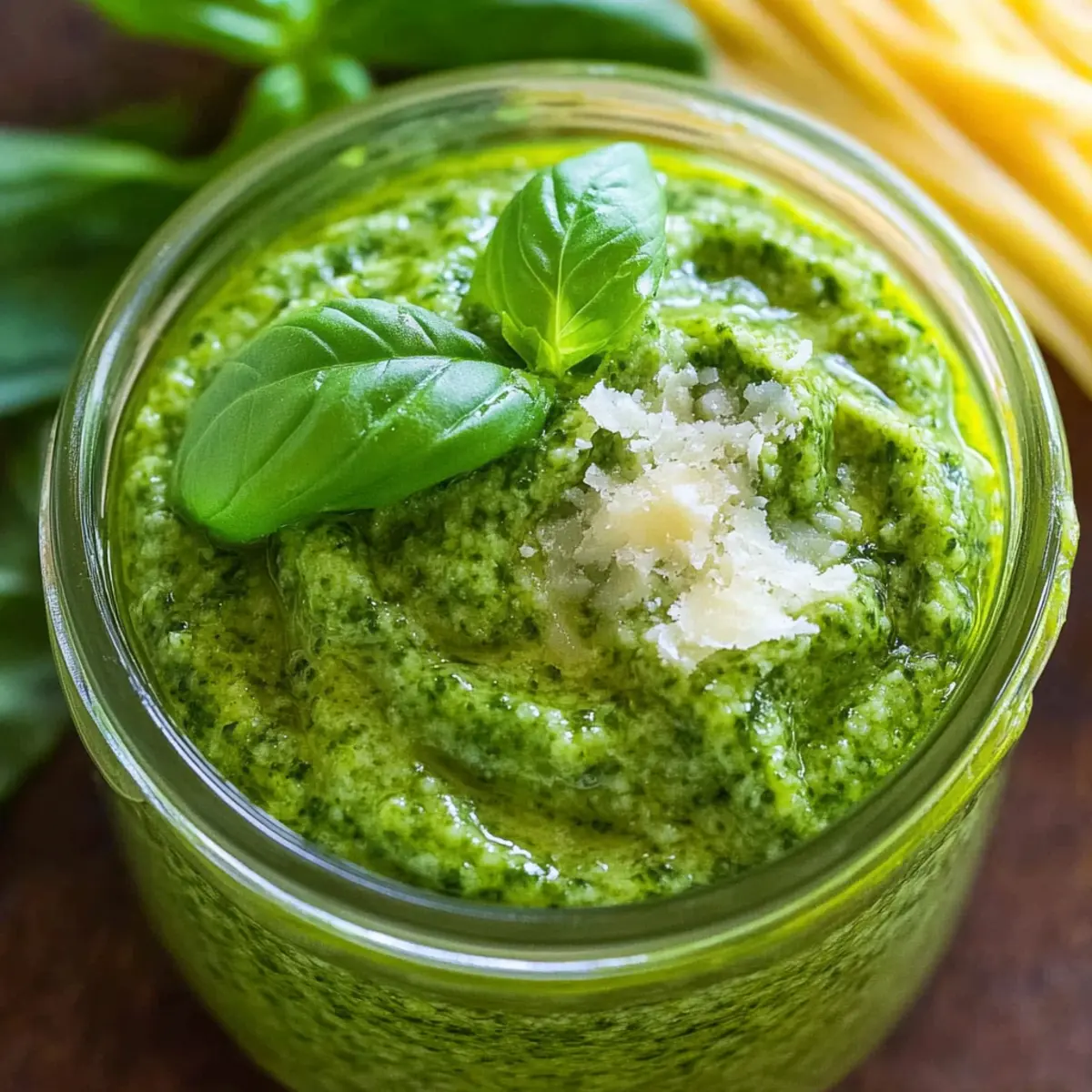
What to Serve with Easy Homemade Basil Pesto?
Transform every meal into a feast by exploring the delightful companions for your vibrant basil creation.
-
Creamy Mashed Potatoes: Serve alongside to add a rich, buttery texture that balances the herbaceous freshness of the pesto.
-
Grilled Chicken: The charred exterior and juicy meat enhance the rich flavors of basil pesto, creating a satisfying main dish.
-
Zucchini Noodles: A healthy, low-carb alternative to pasta, these noodles soak up the luscious, vibrant pesto perfectly, ensuring every bite bursts with flavor.
-
Caprese Salad: Juicy tomatoes and smooth mozzarella pair beautifully with basil pesto, augmenting a classic Italian flavor profile that’s sure to impress.
-
Roasted Vegetables: Add a medley of roasted seasonal veggies for a hearty side that brings out the freshness of the pesto and adds a satisfying crunch.
-
Ciabatta Bread: Perfect for dipping or spreading, crusty ciabatta bread can soak up the creamy basil goodness, making it a delightful accompaniment.
-
Sparkling Lemonade: Refreshing and bright, this lovely beverage enhances the meal, providing a zingy contrast that complements the basil and garlic notes.
-
Chocolate Mousse: End on a sweet note with a rich dessert that balances the savory flavors, creating a memorable meal that lingers in your guests’ memories.
Basil Pesto Variations & Substitutions
Feel free to explore endless possibilities with your homemade Basil Pesto; let your creativity shine through these delightful twists!
-
Nut-Free: Replace nuts with sunflower seeds or pumpkin seeds for a creamy, nut-free option. This will ensure everyone can enjoy the sauce without worry.
-
Vegan: Swap the parmesan cheese for nutritional yeast to create a dairy-free delight that’s still packed with flavor. It’s a fantastic way to keep that savory essence without the cheese!
-
Herb Boost: Add fresh parsley or cilantro for a zestier twist. The combination will refresh your pesto and add an aromatic depth that’s captivating.
-
Spicy Kick: Toss in a pinch of red pepper flakes or a small diced jalapeño while blending for an extra layer of heat. It’s a wonderful way to excite the palate and add a dance of warmth.
-
Different Nuts: Try using walnuts or blanched almonds instead of pine nuts. Each nut variety brings its unique character, creating a truly personalized pesto.
-
Citrus Zing: Add a touch of lime juice along with the lemon juice for an exciting zesty kick. It can brighten your dish and bring a tropical feel to your pesto.
-
Vegetable Infusion: Blend in spinach or arugula to enrich the flavor and increase the nutrient content. This adds a lovely green hue and slight peppery bite for a fun twist.
-
Modified Oils: Substitute extra virgin olive oil with avocado oil for a milder taste. It’s smooth and complements the other ingredients without overpowering them.
These variations will certainly elevate your culinary experience! Don’t forget to check out our tasty Stuffed Sweet Pesto for a luxurious take on your homemade pesto, or try the creative Pesto Caprese Puff for an exciting appetizer! Enjoy the versatility of your Basil Pesto creations!
How to Store and Freeze Basil Pesto
Fridge: Store your freshly made Basil Pesto in an airtight container in the refrigerator for up to 5 days. Pour a thin layer of olive oil on top to prevent browning.
Freezer: For long-term storage, freeze the pesto in ice cube trays. Once solid, transfer the cubes to a sealed bag, where they’ll keep for up to 6 months.
Thawing: When ready to use frozen pesto, transfer it to the fridge for a few hours to thaw, or place in a bowl of warm water for quicker results.
Reheating: To refresh the flavor and texture, gently toss thawed Basil Pesto in a warm pot or over freshly cooked pasta. Avoid boiling to maintain its vibrant color and fresh taste.
Expert Tips for Homemade Basil Pesto
• Fresh Basil Choice: Use high-quality, large-leaf Italian basil for the best flavor. Substituting with Thai or lemon basil can alter the taste profile.
• Nut Variations: Feel free to experiment with walnuts, pistachios, or even sunflower seeds for unique flavors in your Basil Pesto.
• Emulsification Magic: Gradually add olive oil while blending for a smoother, creamier texture. If it gets too thick, a splash of water or extra oil can help.
• Garlic Adjustments: Start with one clove of garlic; you can always add more if you prefer a bolder flavor. Consider garlic-infused oil for a milder taste.
• Storage Secrets: Prevent browning by drizzling a thin layer of olive oil over the pesto before sealing. It stays fresh in the refrigerator for up to 5 days or can be frozen for longer enjoyment.
Make Ahead Options
Busy home cooks will appreciate that Basil Pesto can be prepared ahead of time, saving you precious minutes during the week! You can make the pesto up to 3 days in advance and store it in an airtight container in the refrigerator. To keep it fresh and vibrant, pour a thin layer of olive oil on top before sealing—it helps prevent browning. If you’re considering longer storage, simply freeze the pesto in ice cube trays for easy thawing later. When you’re ready to serve, just defrost the needed portions and toss the pesto with your favorite pasta, spread it on sandwiches, or drizzle it over salads, delighting in that garden-fresh taste without the last-minute rush!
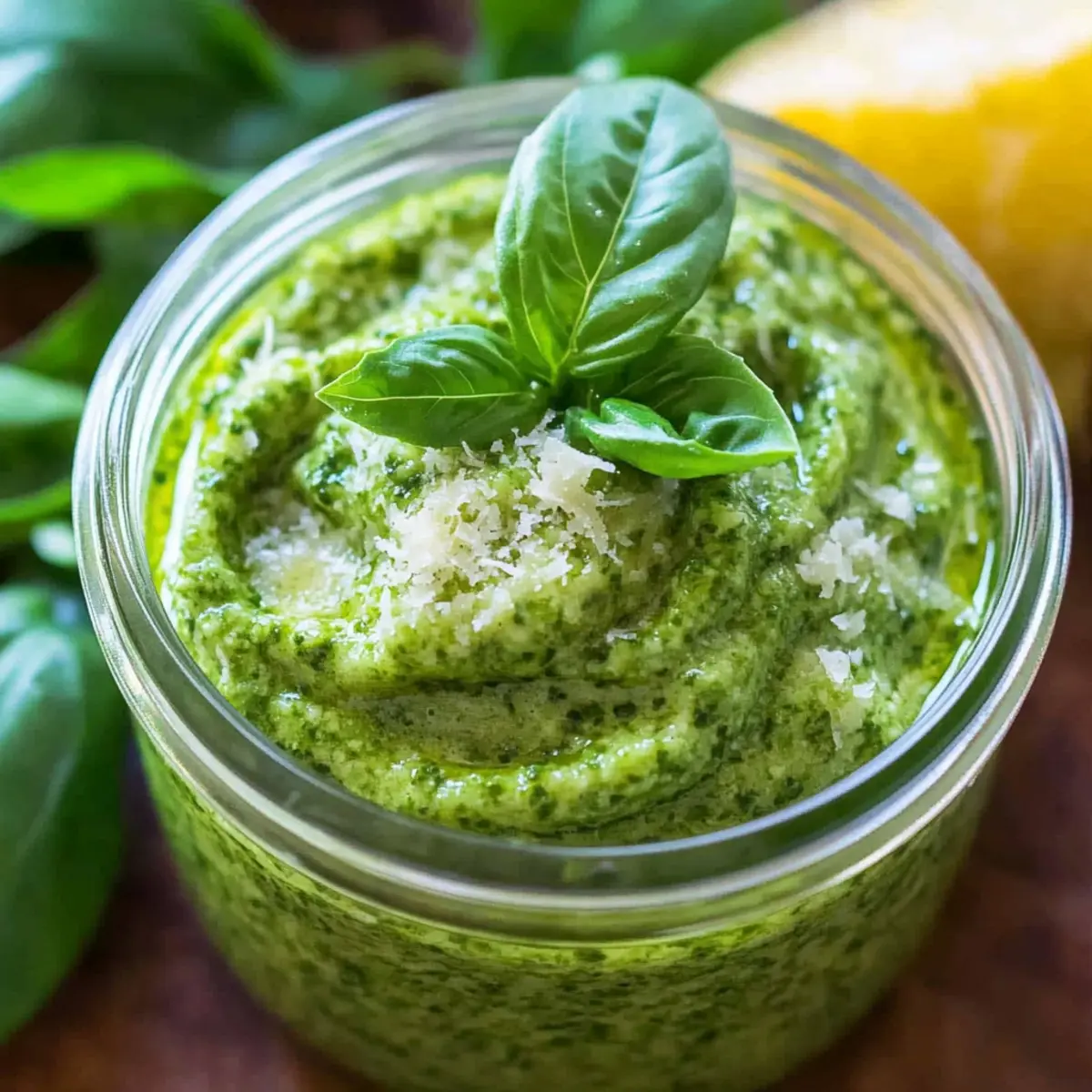
Basil Pesto Recipe FAQs
What type of basil should I use for the best flavor?
For a truly authentic Basil Pesto, I recommend using Italian large-leaf basil, known for its rich flavor. If you’re feeling adventurous, Thai or lemon basil can offer exciting twists to the traditional recipe.
How should I store my Basil Pesto?
Store your freshly made Basil Pesto in an airtight container in the refrigerator for up to 5 days. To prevent browning, pour a thin layer of olive oil over the top before sealing. This little trick keeps the pesto vibrant and fresh!
Can I freeze Basil Pesto? How do I do it?
Absolutely! Freezing Basil Pesto is a great way to enjoy its fresh flavor year-round. Pour the pesto into ice cube trays, filling each compartment. Once frozen, transfer the cubes to a sealed bag. Your pesto can be stored like this for up to 6 months!
What if my pesto is too thick?
If your Basil Pesto is thicker than you’d like, don’t worry! Simply add a tablespoon of olive oil or even a splash of water while processing until you reach your desired consistency. Gradually blending in the oil helps emulsify and achieve a creamier texture.
Are there any dietary considerations for Basil Pesto?
Yes! If you’re making pesto for someone with allergies, be mindful of common allergens like nuts and cheese. You can replace pine nuts with pumpkin seeds or sunflower seeds for a nut-free option and use nutritional yeast instead of parmesan for a vegan-friendly alternative.
Can I add other ingredients to my Basil Pesto?
Definitely! This recipe is versatile. You can experiment by adding ingredients like sun-dried tomatoes, spinach, or even a hint of chili flakes for heat. Just remember to balance flavors and adjust seasoning according to your additions.
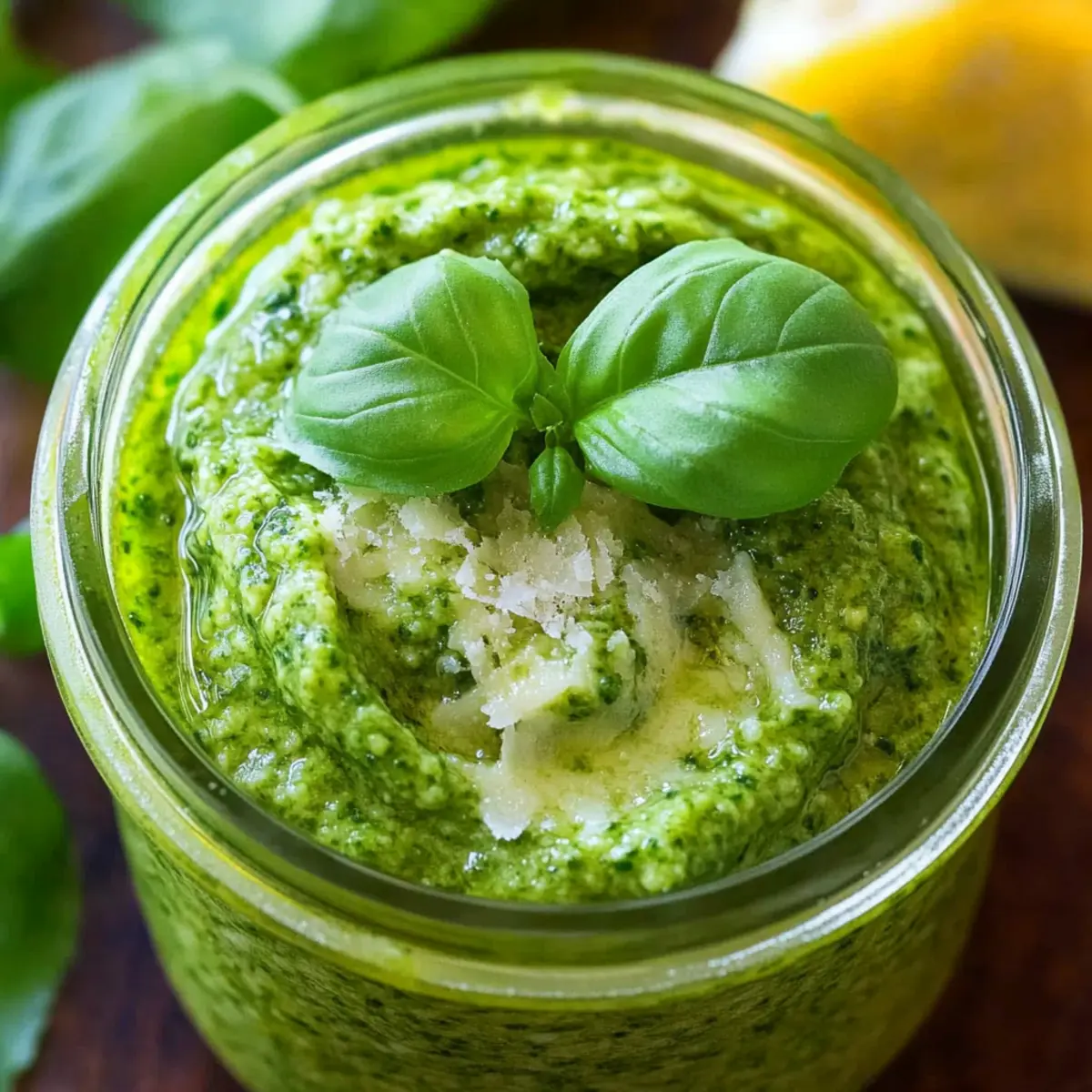
Homemade Basil Pesto: Fresh, Flavorful, and So Versatile
Ingredients
Equipment
Method
- Wash a generous handful of fresh basil leaves under cold running water to remove any dirt. Use a salad spinner to ensure they're completely dry.
- In your food processor, combine the dried basil leaves with grated parmesan cheese, pine nuts, and garlic cloves.
- Drizzle in olive oil and add lemon juice, salt, and black pepper. Secure the lid and pulse for about 30 seconds until chunky.
- Continue to process for another 30 seconds to 1 minute until smooth and creamy. Add extra olive oil if too thick.
- Taste and adjust seasoning. Blend again if necessary.
- Transfer the pesto to a clean jar. Drizzle olive oil on top if not serving immediately to prevent browning.
Leave a Reply