
Late Sunday mornings have a way of luring us into the kitchen, don’t they? That’s when I first discovered the charm of French Baked Eggs, or Oeufs Cocotte, and it changed my brunch game forever. This recipe isn’t just about baked eggs; it’s an experience that marries simplicity and indulgence. With only 20 minutes of prep time, you can whip up this dish and treat yourself and guests to a delightful meal that feels luxurious yet remains effortlessly achievable. Plus, it’s gluten-free and easily customizable; you can toss in your favorite herbs, cheeses, or even leftover veggies for a personal touch. Want to impress without the fuss? Let’s dive into this elegant world of French Baked Eggs together—what delicious combinations will you create?
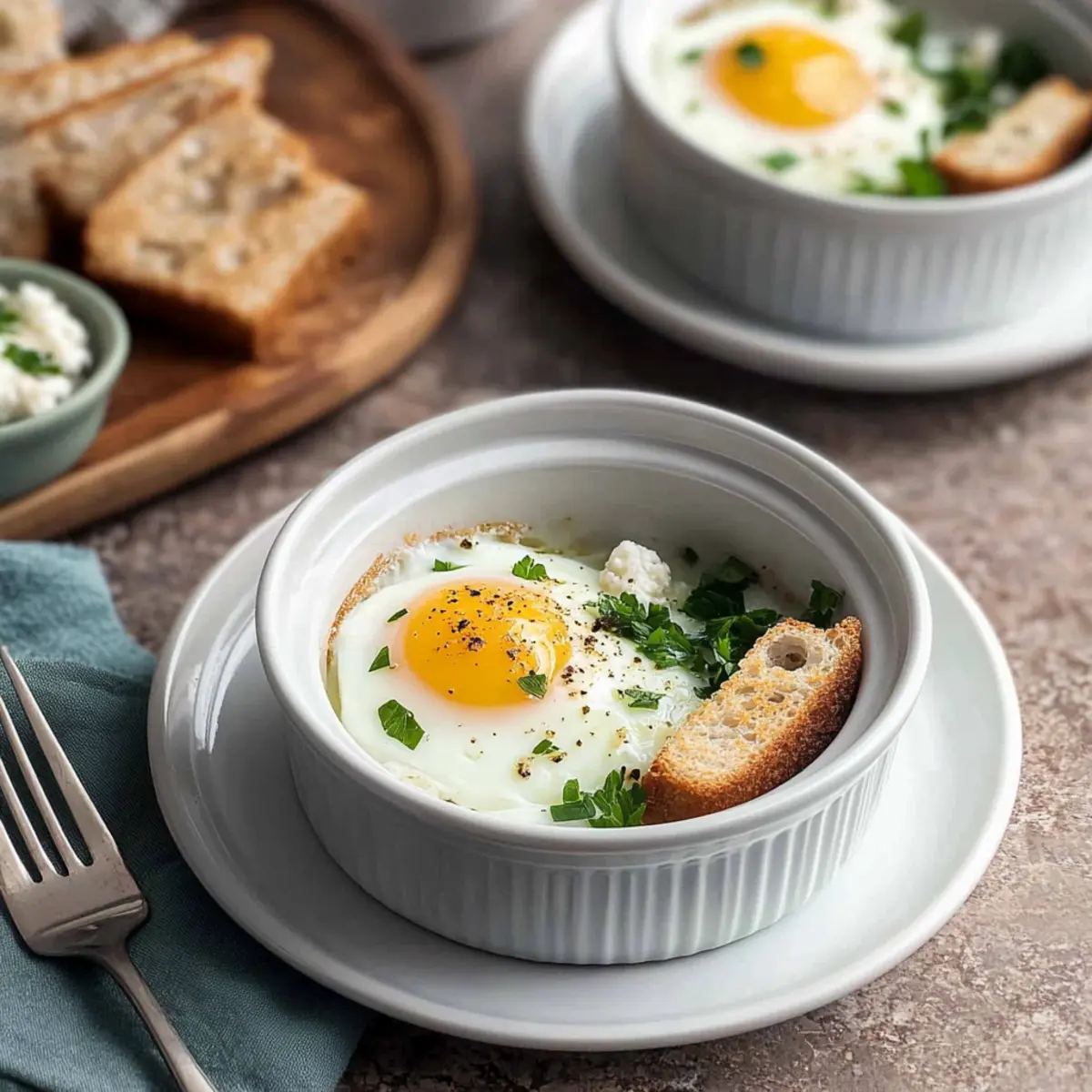
Why are French Baked Eggs a must-try?
Simplicity at its best: Just a few ingredients come together to create an elegant dish that feels gourmet without the fuss.
Customizable flavors: You can easily swap in your favorite cheese, herbs, or even add sautéed veggies like mushrooms or spinach for a personal twist.
Perfect for any occasion: Whether it’s a casual brunch with friends or a cozy breakfast for two, this dish is sure to impress.
Quick cooking time: In just 20 minutes, you can serve a meal that looks and tastes like it took hours to prepare!
Health-conscious option: With a gluten-free base, these baked eggs are a protein-packed treat that supports a balanced diet.
Crowd-pleaser appeal: Serve them with toasted gluten-free bread, and watch everyone savor every creamy bite while you enjoy stress-free entertaining!
French Baked Eggs Ingredients
• Wondering what to gather for this delightful dish? Here’s everything you need!
For the Base
• Butter – Adds richness and helps prevent sticking; use softened unsalted butter for deeper flavor.
• Crème Fraiche/Cream/Yogurt – Provides creaminess and depth; substitute with sour cream or a dairy-free alternative for a lighter version.
• Large Eggs – The main element that provides structure and protein; fresh eggs yield the best results.
For the Flavor
• Fresh Goat Cheese – Offers tanginess and creaminess; substitute with feta or any soft cheese for different taste experiences.
• Chives and Parsley – Infuse freshness and flavor; feel free to use mixed herbs like thyme or dill depending on what you have on hand.
• Salt and Pepper – Essential for seasoning; adjust to taste to achieve the perfect balance for your French Baked Eggs.
Embrace the beauty of this simple, yet luxurious recipe and start your culinary adventure!
Step‑by‑Step Instructions for French Baked Eggs
Step 1: Preheat the Oven
Begin by preheating your oven to 350°F (175°C). While that heats up, fill a kettle with water and bring it to a boil; you will need this for a water bath to ensure even cooking of your French Baked Eggs.
Step 2: Prepare the Ramekins
Take four 4-5 ounce ramekins and coat the insides generously with softened unsalted butter, making sure to cover the entire surface to prevent sticking. This step is essential for the right texture and ease of serving when your delicious baked eggs are ready.
Step 3: Add the Creamy Base
Spoon a layer of crème fraiche, cream, or yogurt into each prepared ramekin. Aim for about 2 tablespoons in each, creating a smooth, creamy base that complements the eggs beautifully. This will add rich flavors that enhance your French Baked Eggs.
Step 4: Crack the Eggs
Carefully break an egg into each ramekin, taking care not to break the yolks. The beauty of this dish lies in the whole, runny yolk that you want to preserve. Make sure each egg sits snugly atop the creamy layer for that perfect baked result.
Step 5: Season and Add Cheese
Sprinkle fresh goat cheese evenly over the eggs, along with your choice of chopped chives and parsley. Season each ramekin with a pinch of salt and pepper, adjusting to your taste preferences. The combination of flavors will elevate your French Baked Eggs to a new level.
Step 6: Prepare the Water Bath
Place the ramekins in a baking dish, ensuring they are spaced evenly apart. Carefully pour the hot water from the kettle into the dish, filling it up to halfway up the sides of the ramekins. This water bath will cook the eggs gently, keeping them soft and creamy.
Step 7: Bake to Perfection
Slide the baking dish into your preheated oven and bake for 14-16 minutes. For a runny yolk, aim for the shorter end of the time, and for a jammy yolk, go for 16-18 minutes. Keep an eye on the ramekins, gently jiggling them to check for doneness; the whites should be softly set while the yolk remains runny.
Step 8: Serve Immediately
Once baked to your liking, carefully remove the ramekins from the oven and the water bath (use tongs or oven mitts to avoid burns). Serve your French Baked Eggs right away with toasted gluten-free bread for dipping, allowing everyone to enjoy this creamy culinary delight!
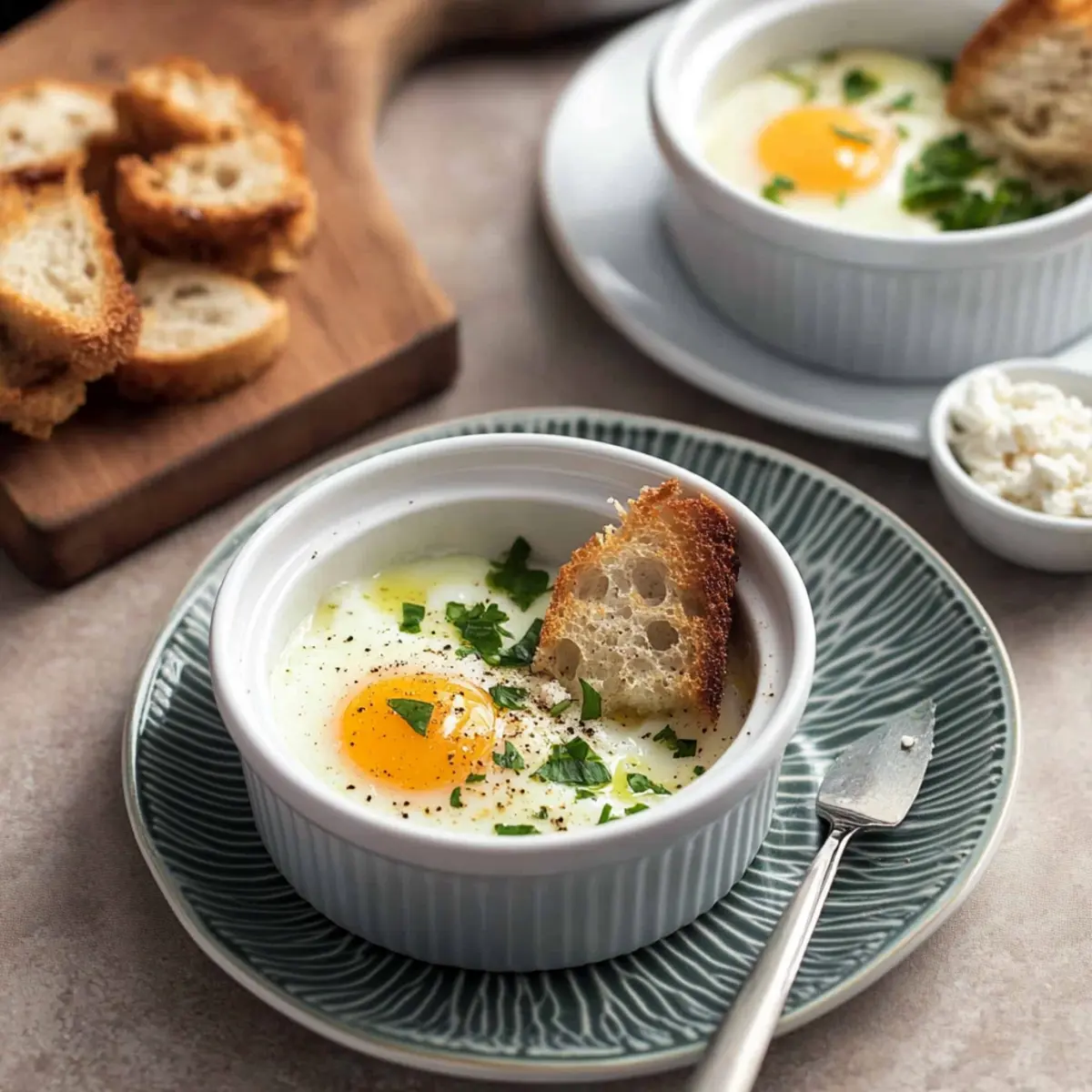
How to Store and Freeze French Baked Eggs
Fridge: Store leftover French Baked Eggs in an airtight container for up to 3 days. Reheat gently in the oven or microwave until warmed through, keeping the yolk’s texture in mind.
Freezer: It’s best to enjoy French Baked Eggs fresh, but if you must freeze them, allow to cool completely, wrap tightly, and store in the freezer for up to 1 month. Reheat from frozen in the oven, adding a splash of cream to maintain moisture.
Reheating: If reheating from the fridge, place the ramekins in a preheated oven at 350°F (175°C) for about 10-15 minutes until warmed through. Be cautious not to overcook!
Make-Ahead Tip: You can prepare the ramekins in advance and keep them in the fridge overnight. Bake just before serving to enjoy that fresh, creamy goodness!
Expert Tips for Perfect French Baked Eggs
-
Egg Freshness Matters: Always use the freshest eggs available. Fresh eggs yield the best texture and flavor for your French Baked Eggs.
-
Water Bath Precision: Make sure the water bath reaches exactly halfway up the sides of the ramekins. This ensures even cooking and prevents overbaking.
-
Monitor Baking Time: Keep a close eye on the timer. Different ovens can vary, so gently jiggle the ramekins for doneness. Aim for the desired yolk consistency to achieve the perfect French Baked Eggs.
-
Customize with Veggies: Add sautéed vegetables like spinach, mushrooms, or roasted red peppers before the eggs for an extra flavor boost.
-
Experiment with Cheeses: Don’t hesitate to swap the goat cheese with other favorites like cheddar or feta. Each variation will bring a unique taste to your baked eggs!
-
Perfect Serving Tip: Serve your French Baked Eggs immediately. They are best enjoyed freshly made, with toasted gluten-free bread for that delightful dipping experience.
What to Serve with French Baked Eggs
Imagine serving up a delightful spread that elevates your French Baked Eggs into a spectacular meal experience.
- Toasted Gluten-Free Bread: Perfect for dipping into the creamy yolk, bringing a satisfying crunch that complements the softness of the eggs.
- Mixed Green Salad: A light, refreshing salad with a tangy vinaigrette balances the richness of the dish. The crisp texture and bright flavors provide a lovely contrast.
- Roasted Asparagus: Adding this vibrant vegetable not only enhances the plate’s appeal but contributes earthy notes that pair beautifully with baked eggs.
- Savory Quiche: Offer a slice of quiche alongside for a heartier brunch option. The flaky crust and variety of fillings create a delightful textural experience.
- Fresh Fruit Salad: A bowl of seasonal fruits adds a sweet touch, cleansing the palate between bites. This freshness brightens the overall meal.
- Chilled Mimosas: A glass of bubbly mimosa adds a festive flair to your brunch. The citrus notes complement the creamy eggs, enhancing the celebratory mood.
Make Ahead Options
These French Baked Eggs are perfect for meal prep enthusiasts! You can prepare the ramekins (butter, crème fraiche, and cheese) up to 24 hours in advance and refrigerate them, which will save you valuable time in the morning rush. Just crack the eggs in right before baking to maintain their freshness and prevent them from overcooking. When you’re ready to serve, place them in a water bath and bake as directed. Remember to check the doneness closely; beautiful, creamy layers await you! By prepping ahead, you’ll enjoy a luxurious brunch experience with minimal effort, allowing you to savor every delightful bite without any stress!
French Baked Eggs Variations & Substitutions
Feel free to get creative and customize your French Baked Eggs to reflect your personal tastes and dietary preferences!
- Vegetarian Delight: Add sautéed spinach or mushrooms to the base for a nutritious twist. It boosts the flavor while staying meat-free.
- Hearty Veggie Boost: Toss in any leftover roasted vegetables, such as asparagus or red peppers, before adding eggs for a delightful surprise. They’ll add layers of flavor and texture.
- Cheese Swap: Use shredded cheddar or creamy ricotta instead of goat cheese for a different flavor profile. Each cheese brings its unique creaminess to the dish.
- Herb Frenzy: Experiment with fresh herbs like dill, thyme, or basil in place of chives and parsley for a fresh spin. Imagine the fragrant aroma wafting through your kitchen!
- Dairy-Free Version: Opt for coconut yogurt or cashew cream to keep the recipe dairy-free. The result is still rich and delicious with a unique flavor twist.
- Spicy Kick: Add a pinch of red pepper flakes or a dash of hot sauce for heat. The savory creaminess pairs well with a little extra spice!
- Premium Garnish: Top with a sprinkle of truffle oil or a few slices of avocado right before serving, taking your dish to new gourmet heights.
- Mini Baked Egg Cups: For a fun serving idea, use mini muffin tins instead of ramekins. They make great bite-sized appetizers and can cater well to gatherings!
While you’re experimenting, why not explore other delicious ideas like Baked Eggs Sauteed or perhaps enjoy the elegance of Baked Brie Puff? Each recipe holds its own charm in your home cooking repertoire!
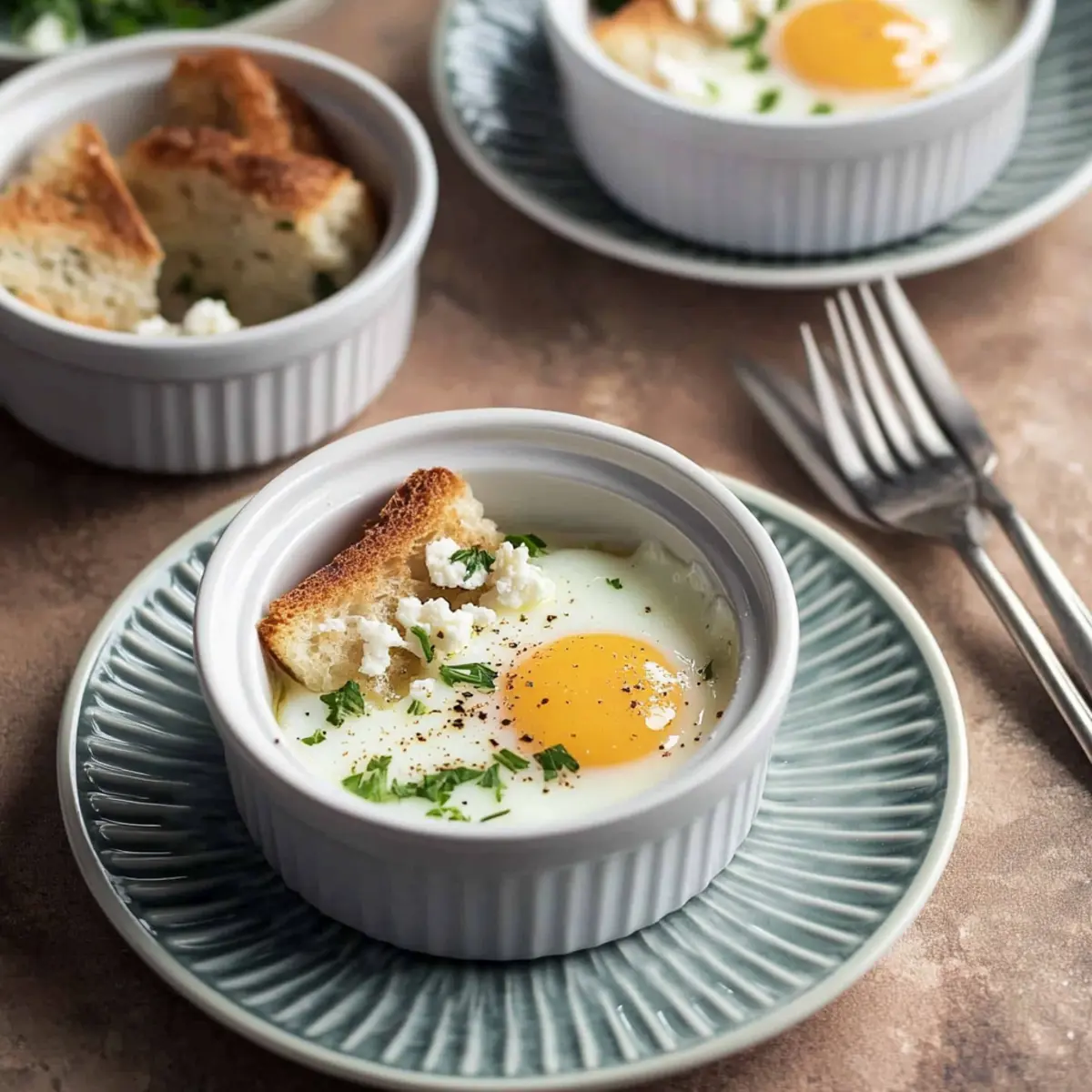
French Baked Eggs Recipe FAQs
How do I choose the right eggs for French Baked Eggs?
Absolutely! When selecting eggs, look for the freshest ones you can find, ideally organic or free-range, as these will provide the best flavor and texture. Check for eggs that have clean, uncracked shells and avoid any that have dark spots or a strong odor.
What’s the best way to store leftovers of French Baked Eggs?
For optimal freshness, store any leftover baked eggs in an airtight container in the fridge for up to 3 days. I recommend reheating them gently in the oven at 350°F (175°C) for about 10-15 minutes, checking regularly to ensure the yolks retain their delightful texture.
Can I freeze French Baked Eggs for later use?
Yes, you can! However, keep in mind that freezing may affect the texture slightly. Allow your baked eggs to cool completely, then wrap them tightly in plastic wrap or aluminum foil. Store them in the freezer for up to 1 month. When you’re ready to eat, reheat them directly from the freezer in the oven, adding a splash of cream on top to help keep them moist.
What should I do if my eggs aren’t cooking evenly?
If your French Baked Eggs aren’t cooking uniformly, it could be due to the temperature of your oven or the depth of the water bath. Ensure the water reaches halfway up the ramekins and closely monitor them while baking. If needed, adjust the cooking time based on how runny or firm you want the yolks. A gently jiggle should help you gauge doneness.
Are there any dietary considerations I should keep in mind?
Absolutely! This recipe is naturally gluten-free, making it suitable for those avoiding gluten. If you’re making this for guests, check for any allergies, particularly to dairy, as the crème fraiche and cheese can be substituted with dairy-free alternatives. Always be mindful of those dietary needs when planning your cooking!
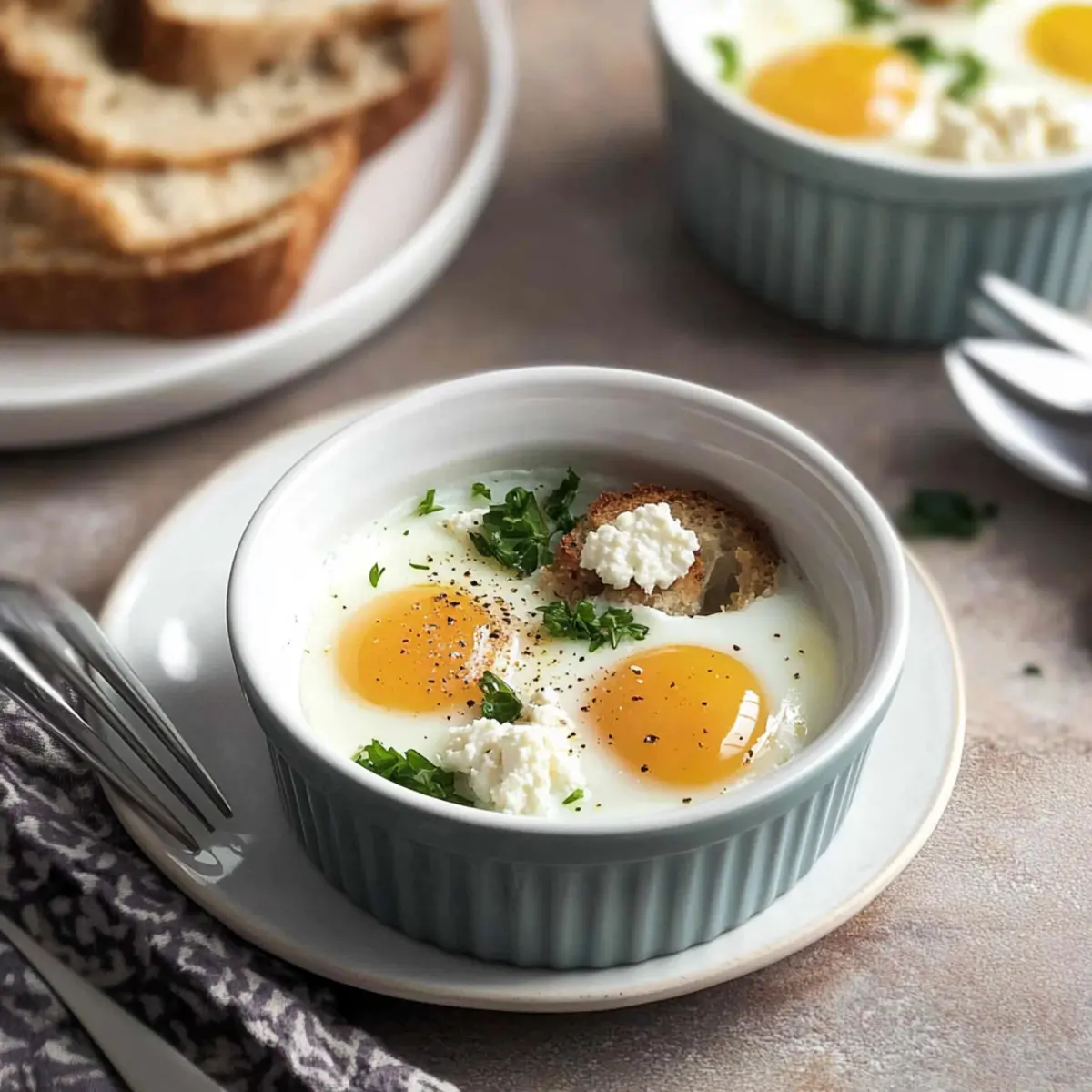
French Baked Eggs: Easy, Creamy Brunch Delight Awaits
Ingredients
Equipment
Method
- Preheat your oven to 350°F (175°C) and boil water for a water bath.
- Coat the insides of four ramekins with softened unsalted butter.
- Spoon a layer of crème fraiche, cream, or yogurt into each ramekin.
- Carefully crack an egg into each ramekin without breaking the yolk.
- Sprinkle fresh goat cheese, chopped chives, and parsley over the eggs, then season with salt and pepper.
- Place the ramekins in a baking dish and pour hot water halfway up the sides.
- Bake for 14-16 minutes, checking for doneness based on yolk preference.
- Serve immediately with toasted gluten-free bread.
Leave a Reply